
Cast In Situ
Pavement Light
Cast In Situ Construction
All Luxcrete pavement lights, roof lights and floor lights can be cast in situ by our highly skilled and dedicated personnel. Casting pavement lights in situ allows glass lenses, pressed glass lenses or pressed glass prism lenses to be set within reinforced concrete, creating a durable, light-transmitting structural feature for basement areas, entrance areas and other underground areas. This method also supports glass blocks for suitable roof lights, floor lights and related constructions.
In situ casting allows larger panels to be formed and is particularly suitable where a pavement light cast in situ construction needs to accommodate site falls, levels, complex openings or existing building front conditions. However, careful consideration must be given to the size and shape of all panels to minimise the possibility of shrinkage. Certain site conditions and locations may dictate in situ casting, and our technical department is available to provide further advice.
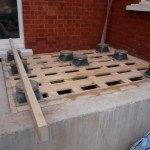
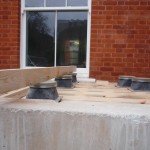
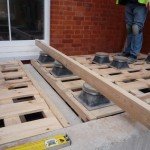
How Cast In Situ Pavement Lights Are Formed
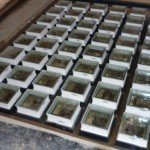
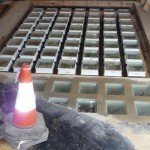
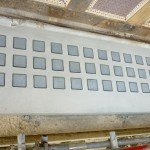
Our timber formwork is placed within the structural opening and supported on hangers and/or Acrow props. The formwork is then adjusted to achieve the required levels and falls before the casting process begins.
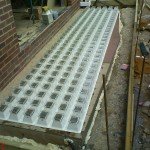
The plastic moulds and glass lenses are then placed onto the formwork. Luxcrete pavement lights can incorporate square or circular lens formats, including 100 x 100mm glass lenses and circular Ø117mm lenses, depending on the selected construction. Once all levels have been agreed, our batched grade 40 concrete is punned between the moulds.
At this stage, H12 steel reinforcing bars are placed between the mould rows and columns to strengthen the reinforced concrete panel and provide load-bearing capacity. Required loading, distributed loadings, fire performance where applicable, and local authority requirements, including London authorities where relevant, should always be considered at specification stage. Luxcrete’s technical department can help determine loading and provide advice where needed.
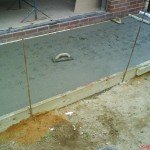
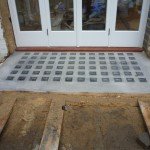
The grade 40 concrete is then floated level and receives a hand-floated, trowelled finish to the top surface. The concrete wearing surface can be left uncoloured as standard grey, or specified with bespoke colours or special surface finishes. Where required, sandblasted glass lens options can be used, and Luxcrete can add chromite or carborundum grains to the top surface to improve slip resistance.
Design Flexibility for Cast In Situ Pavement Lights
Cast in situ pavement lights are constructed directly on site, making them suitable for bespoke shapes, larger areas and projects where existing structural conditions dictate the construction method. By combining reinforced concrete with glass lenses, glass blocks or pressed glass prism lenses, this approach can provide as much light as possible while maintaining strength, durability and a distinct visual appeal.
This makes cast in situ work particularly useful for restoration projects, new pavement lights and applications where the pavement light must integrate with existing openings, basement areas, entrance areas or the surrounding area. As a specialist in UK pavement light manufacturing, Luxcrete combines technical advice with skilled site installation to help ensure each light complies with the project requirements.
Types of Pavement Lights, Glass Blocks and Cast Iron Frames
Pavement lights may be supplied as pre cast, precast units or cast in situ constructions, depending on the project requirements. Precast units are formed off site and delivered for installation, while cast in situ units are constructed directly within the structural opening. In some cases, precast form elements, in situ surface coverings or related SG type finishes may be considered where the surrounding area or hard landscaping needs to be matched.
Material and design choices can include glass blocks, glass lenses, pressed glass lenses, pressed glass prism lenses and, in restoration contexts, reference to older cast iron frames or cast iron frames glazed with cut squares of glass. The final specification should be determined by required loading, slip resistance, face size limitation, light transmission and the desired visual appearance.
Applications for Pavement Lights, Roof Lights and Floor Lights
Pavement lights are used to introduce natural light into basement areas, entrance areas and other underground areas. They can also provide a structural feature at the building front, adding light while preserving the distinct visual appeal of both traditional and contemporary buildings.
Cast in situ construction can be specified for pavement lights, vault lights, roof lights and floor lights where site levels, falls, opening sizes or access conditions require a bespoke solution. This high utilitarian value makes pavement lights suitable for refurbishment, restoration and new construction projects.
Cast In Situ Compared with Pre Cast Pavement Lights
Compared with pre cast and precast units, which can offer quick installation and the consistency of factory mixed concrete cast into controlled precast panels, cast in situ construction provides greater flexibility for site-specific openings, unusual levels and larger panels. The suitability of precast units depends on the required loading, spanning ability, site access and installation programme.
Historically, plain glass fenestration and cast iron frames glazed with cut squares of glass were quickly superseded by pressed glass lenses and later reinforced concrete constructions. Today, Luxcrete can produce pavement lights, vault lights, roof lights and floor lights that are selected to suit the project, the surrounding area and the amount of added light required.
Design and Installation Considerations
Careful consideration must be given to panel size, panel shape, required loading, distributed loadings, fire performance where applicable, slip resistance and the surrounding area. Finish options may include standard grey concrete, bespoke colours, sandblasted textures, special surface finishes and, where specified, chromite or carborundum grains added to the concrete wearing surface to improve slip resistance.
The installation process should be carried out by experienced personnel who understand formwork, reinforcement, glass lens placement and the requirements of cast in situ concrete. Luxcrete’s technical department can provide guidance so that the selected pavement light, roof light or floor light achieves acceptable results and the finished light complies with the project specification.
Project Examples and Recent Projects
Luxcrete has worked on a wide range of pavement light, vault light, roof light and floor light projects, including restoration work, commercial schemes and new pavement lights for building fronts, entrance areas and basement areas. The gallery provides beautiful examples of how cast in situ and pre cast constructions can be used to add light, improve slip resistance and create a visually appealing structural feature.
For recent projects or case-specific requirements, please contact the technical department to discuss loading, panel sizes, surface finishes, glass lens options and local authority requirements.
Why Choose Luxcrete for UK Pavement Light Manufacturing
Luxcrete is a specialist UK pavement light manufacturing company with extensive experience in pre cast and cast in situ concrete and glass constructions. Our services include supply only, supply and fix, full on-site renewal, site surveys, technical advice and bespoke panels manufactured or constructed to project requirements.
By working with Luxcrete, clients benefit from skilled personnel, carefully selected materials, comprehensive fixing and maintenance information, and a single point of responsibility for the products or works undertaken. Whether the project involves pavement lights, roof lights, floor lights, vault lights, smoke outlet panels, unglazed units for non-light-transmitting applications or heavy duty structural requirements, our technical department can help identify the most suitable construction.
Summary
Cast in situ pavement lights offer a flexible solution where larger panels, complex site levels, existing openings or bespoke structural requirements need to be accommodated. Using reinforced concrete, glass lenses, glass blocks or pressed glass prism lenses, Luxcrete can create durable pavement lights that introduce added light into basement areas, underground areas and entrance areas while maintaining slip resistance, structural performance and visual appeal.
This method is particularly useful where pre cast or precast units are not the most practical option, or where site-specific conditions require the pavement light to be formed directly within the structural opening.
Frequently Asked Questions
A pavement light cast in situ construction is formed directly on site, with glass lenses or glass blocks set into reinforced concrete. This allows the panel to suit the structural opening, site levels and project-specific requirements.
Cast in situ is often better where larger panels, unusual shapes, complex falls, restricted access or existing building front conditions need to be accommodated. Pre cast units may be more suitable where speed, factory production and straightforward installation are the main priorities.
Yes. Slip resistance can be improved through appropriate surface finishes, sandblasted glass lens options and, where specified, additives such as chromite or carborundum grains in the concrete wearing surface.
Yes. Luxcrete works with pavement lights, roof lights and floor lights, and many concrete and glass constructions can be considered in pre cast or cast in situ formats depending on the project.
Cast iron frames are mainly relevant in restoration contexts, where older pavement lights, vault lights or pavement prisms may need to be understood, replicated or replaced. Modern Luxcrete pavement lights generally use reinforced concrete with glass lenses or glass blocks.
Yes. Depending on the construction and project requirements, options may include standard grey concrete, bespoke colours, sandblasted textures, exposed aggregate or other special surface finishes.